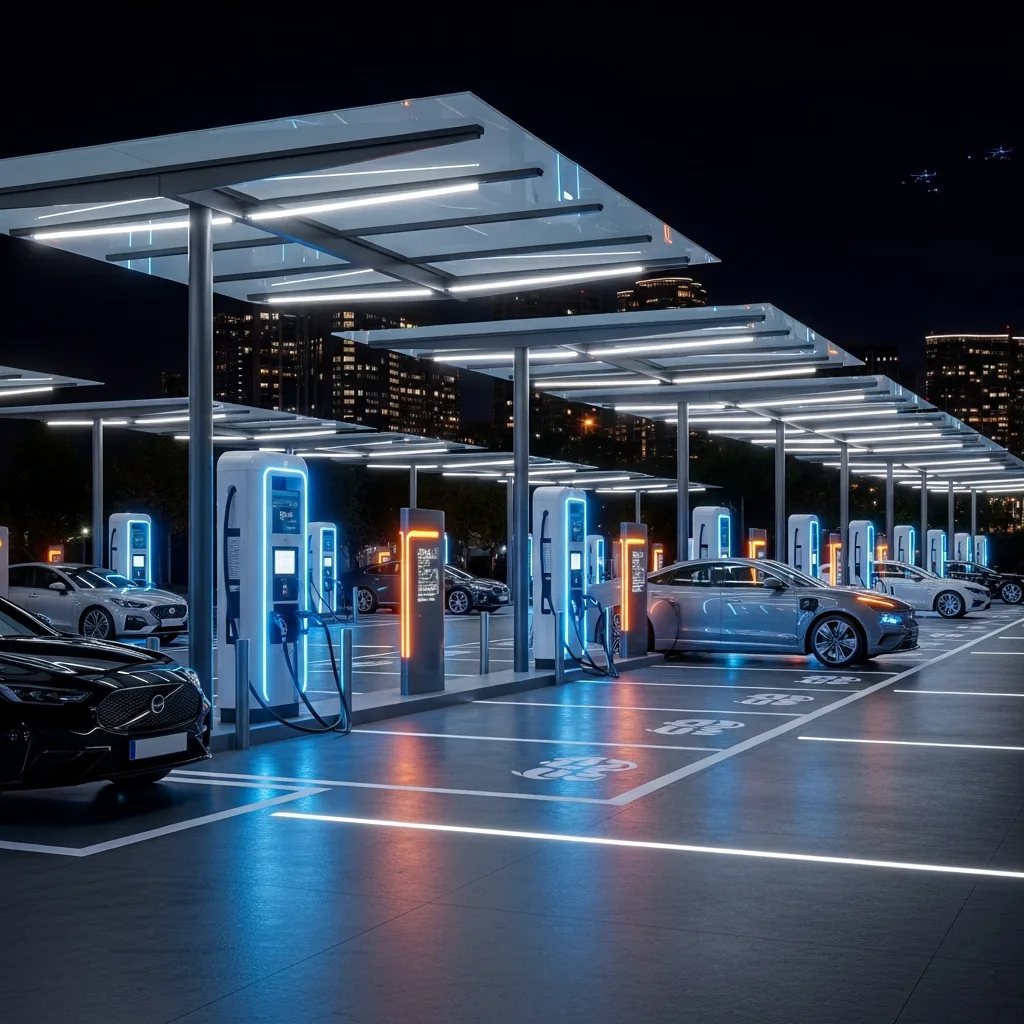
Workplace and fleet charging
AC and DC infrastructure for companies, operational fleets and parking facilities, sized around dwell times, shifts and actual demand.

Electric mobility
Installing chargers is not enough. Available power, dwell time, vehicle demand, solar, storage and load management must operate as one coordinated system.
Energy Division concept study
These two configurations, developed for a client proposal, show how a solar carport, high-power chargers, access lanes, a control point and vehicle flows can be coordinated from the earliest design stage.
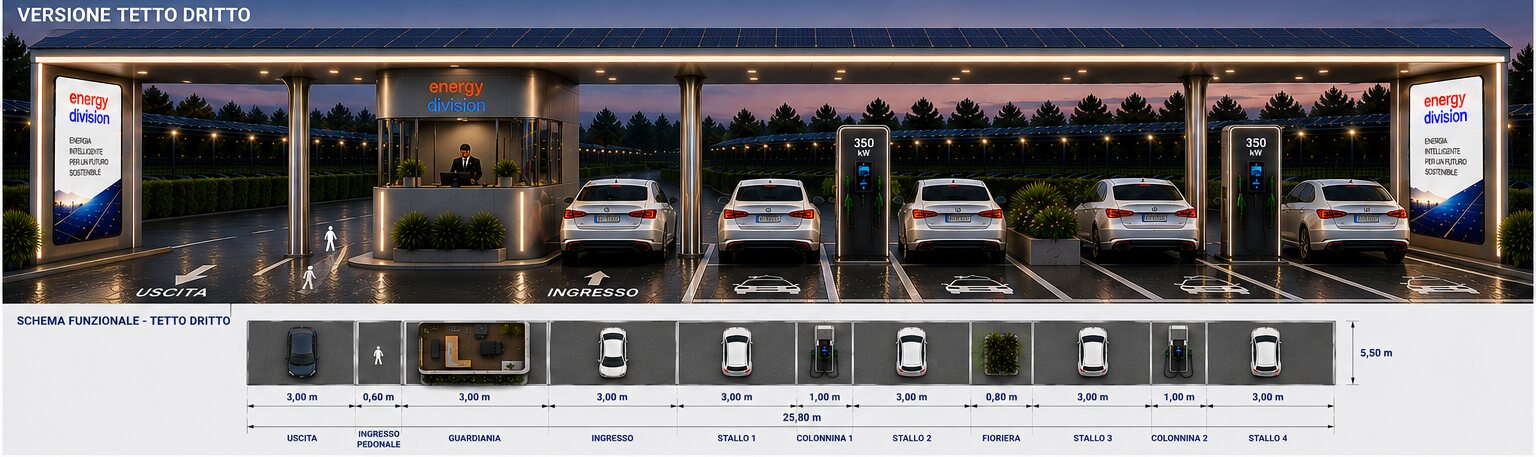
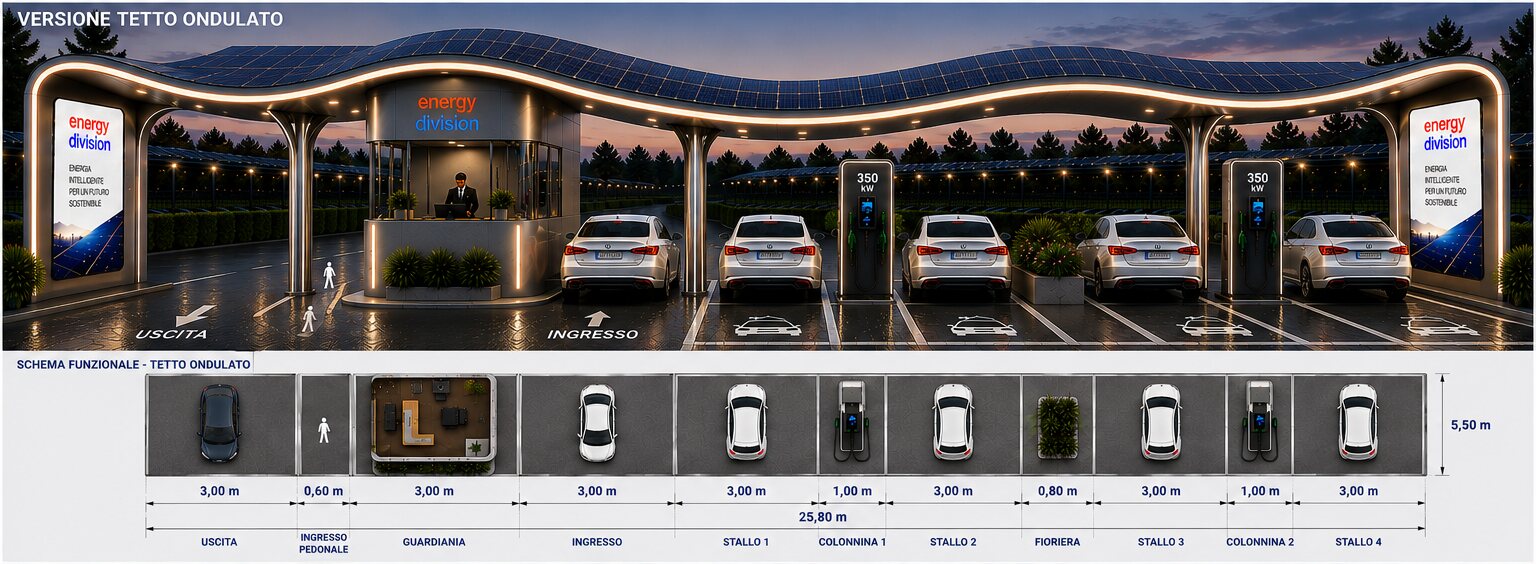
Concept-study images. Dimensions, power ratings, layout, accessibility and equipment must be validated for the actual site.
We analyse available power, vehicle use, dwell times, simultaneous demand, grid limits and operational priorities. Charger quantity and rating follow these data rather than a catalogue value.
Corporate parking, fleets, logistics, retail and transit locations require different configurations. Solar, carports, BESS and EMS can reduce peaks, use local generation and support future expansion.
Integrated configurations
AC and DC infrastructure for companies, operational fleets and parking facilities, sized around dwell times, shifts and actual demand.
High-power solutions for transit locations and professional applications, coordinated with the grid, substations and service priorities.
Solar generation, shading, storage and charging are integrated to make better use of space and available energy.
All-in-one solar lighting and independent systems for parking areas, roads and sites without suitable electrical infrastructure.
How we develop the infrastructure
Operating contexts
A 700 kW charger is useful only if the grid, substation, vehicles and operating model can use it. We compare charging speed, electrical availability, dwell time and costs before defining the architecture.
Energy integration
Where the grid is constrained, the solution can coordinate solar generation, storage, dynamic power limits and charging priorities. The objective is to serve vehicles without making every capacity increase a grid problem.
Share vehicle number and type, dwell times, available power, location and expected growth. We can establish an initial technical architecture and connect it to Project Check 90.